


Using DiSC in Performance Reviews

Employee performance reviews can feel like checkbox exercises. But what if they could become powerful, personalized conversations that inspire growth? Using insights from Everything DiSC®, managers can transform performance evaluations into relationship-building opportunities.
Key Takeaways
- Knowing your DiSC style as a manager helps you prepare for performance reviews. Reflecting on your management style and biases can improve how you present feedback to and interact with employees.
- Understanding the DiSC style of the team members you’re reviewing is crucial for motivation. Tailoring your approach to their style can make the review more effective and meaningful.
- Reviewing DiSC comparison reports with your direct reports can facilitate productive conversations. These reports help address differences in temperament and working styles on your teams, leading to better communication and collaboration.
As a manager, how can you move beyond generic feedback to deliver performance reviews that truly resonate?
Understanding your own DiSC style and your direct reports’ styles gives you clarity. You know what motivates each individual, how to communicate clearly, and what might be causing stress. DiSC empowers you to be intentional about your tone, timing, and approach.
Reviewing your DiSC® profiles
Your style matters
Managers want to believe that they review people objectively, and that their employees want an objective performance evaluation. But the truth is that our emotions and personality will play a role in any relationship. So, it’s important to know what our biases are. We tend to be biased toward traits we share with others, and personality traits are no different.
Knowing your own DiSC style as the reviewer will help you to prepare. For example, if you have a D style, you might want to reflect on how to avoid sounding confrontational or abrupt. If you have an i style, plan how you'll be more direct and focused. Often, how you present feedback is as critical as what you present.
In particular, you’ll want to review your Everything DiSC® Management on Catalyst™ profile for insights. It might suggest questions about your management style or skills that you want to ask about during the review.
Everything DiSC® Worksmart on Catalyst helps you understand your management style in the context of your specific team. This tool is helpful for getting really specific about how you handle the most common management challenges: giving feedback, managing conflict, empowering employees, navigating change, and motivating your team.
Reflect on your management style: how you tend to direct and delegate, what stresses you out. Thinking through your management tendencies can help you prepare to be your best during an employee performance review.
Their style matters
If you want a review to be motivational, then knowing the style of the person being reviewed is crucial. You won’t motivate someone with an S style by asking him to lead a change management committee. You won’t motivate a C-style employee by giving her generalized positive feedback.
You might not have access to your employee’s full DiSC report, but knowing their style helps you understand their priorities. This can show what motivates them and what stresses them. You might know if they are of a similar or different style to others they work with. This provides a bit of context for how you’ll conduct the review.
You might also ask your employee if they are comfortable bringing in their profile so you can review it together. The Everything DiSC Workplace® on Catalyst™ profile gives suggestions for increasing one’s workplace effectiveness. (On Catalyst™, navigate to Workplace > What drives you > Strategies. See page 16 of the traditional Workplace profile. You can view a sample Workplace profile here [PDF].)
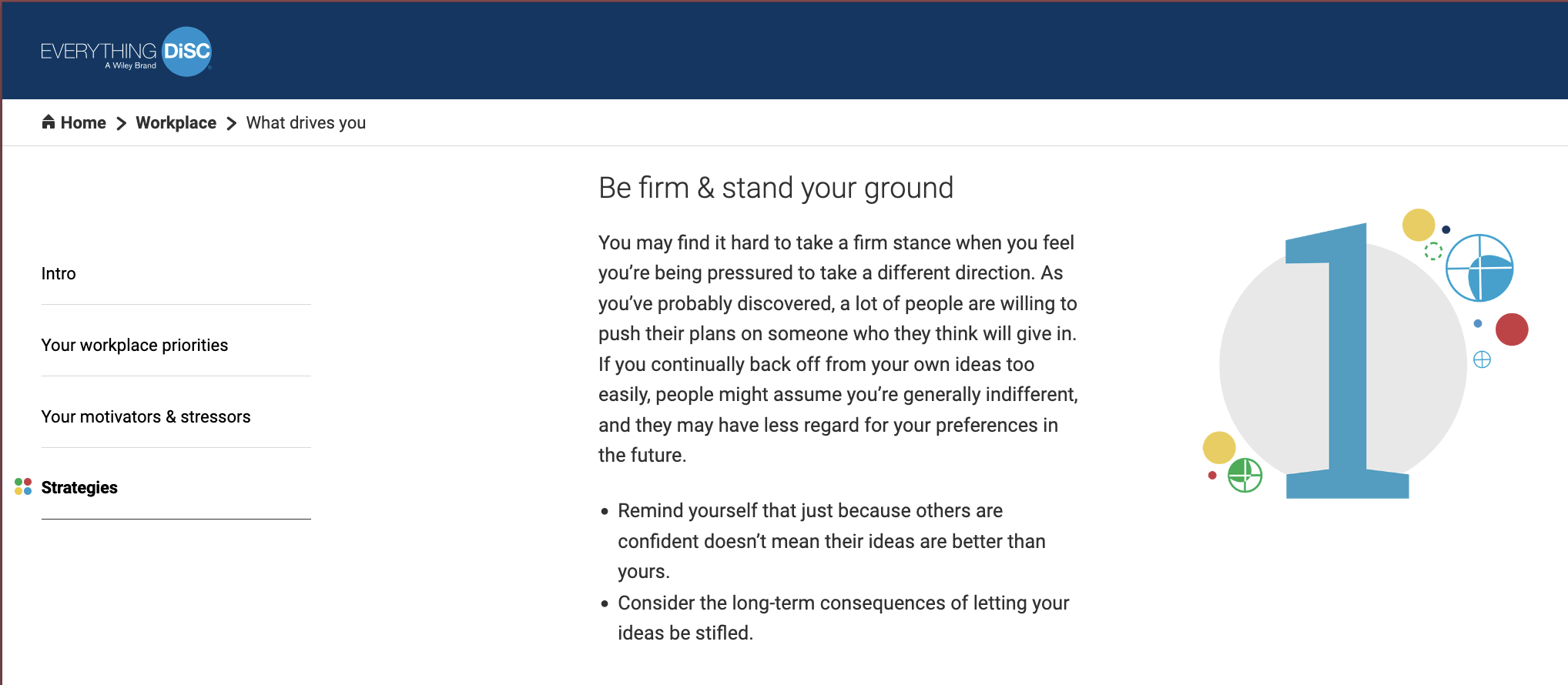
For example, my report suggests “Be firm & stand your ground” as a strategy to improve my workplace effectiveness. As someone with an S style, I don't find it comfortable to be forceful with my opinions.
My Workplace report reminds me that “If you continually back off from your own ideas too easily, people might assume you’re generally indifferent, and they may have less regard for your preferences in the future.” My manager and I could discuss whether I agree that I back off too easily when pressured by more assertive teammates. We could collaborate on strategies for me to practice taking a firm stance.
Reviewing these suggestions together can be a comfortable place to begin your employee performance review. From a place of curiosity, ask about how well these strategies might work for your employee. Invite them to share other parts of their profile they found interesting. Discuss short-term and long-term professional development goals.
The Everything DiSC Management profile has tips for motivating people with different styles. It also has a helpful section on developing the potential of direct reports of each style. (You can review a Management sample report here [PDF].)
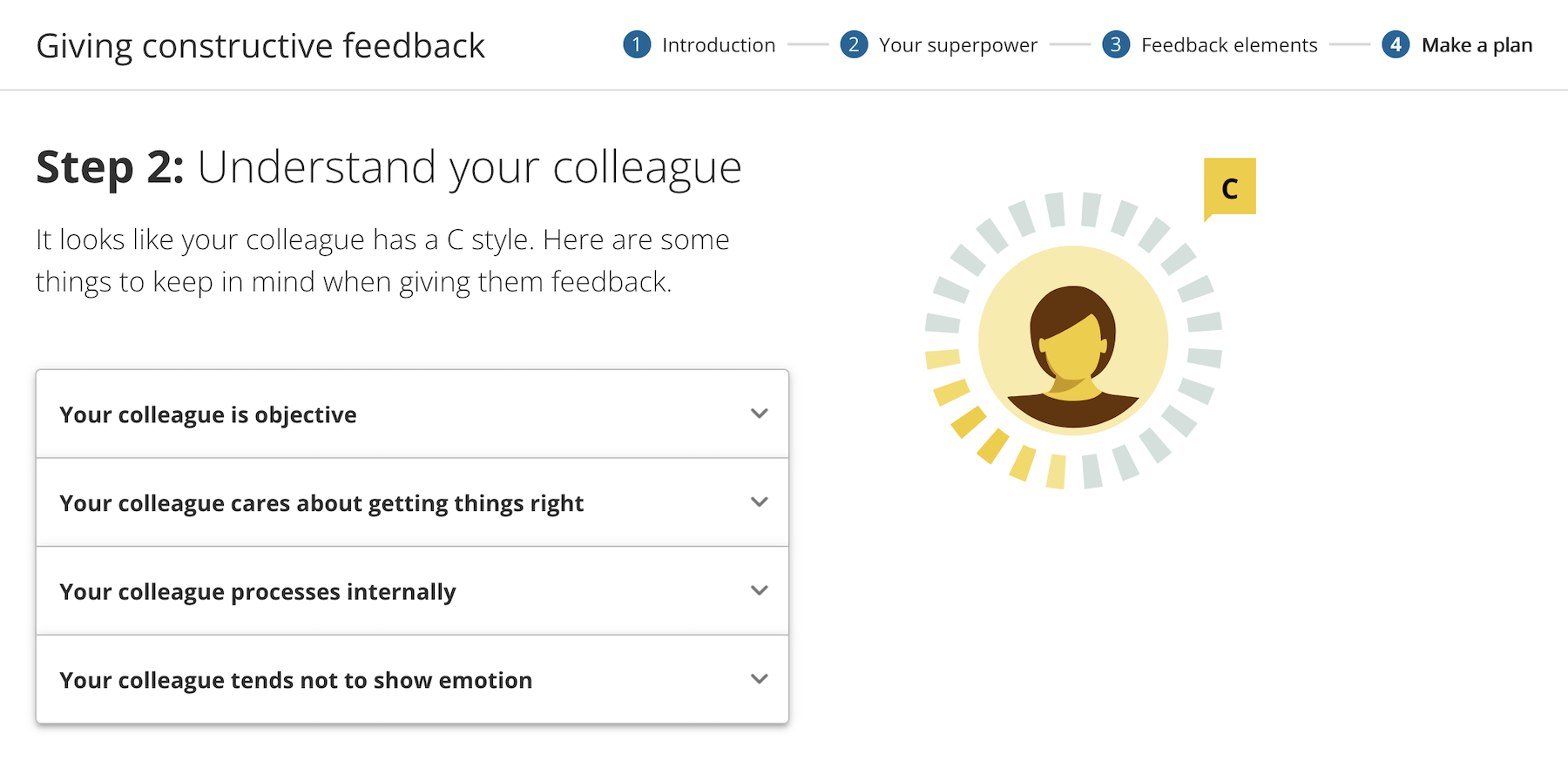
Everything DiSC® Worksmart has learning modules for managers that include personalized action plans. Before a performance review, going through the “Giving constructive feedback” and “Motivating direct reports” modules is especially helpful. Managers can create action plans for the specific employee they will be reviewing.
For example, the Worksmart feedback module reminds me of my innate feedback superpowers as a manager (I'm receptive!) and the elements of constructive feedback that don't come as naturally to me (like drawing attention to problems in a timely manner). Then I can choose a specific direct report and put together an action plan for giving them feedback. During the performance review, I'll have this reminder of their tendencies when receiving feedback, as well as my action plan for a productive session with them.
Comparing styles
Reviewing style comparison tools with your direct reports can easily fill an hour with useful discussion. Most importantly, you can use these reports to open communication about how to better work with each other. You can respond to what a report says about your differences in temperament or pace, for example. If you don’t share the same traits, the report gives you a way to speak about them abstractly before you introduce concrete examples.
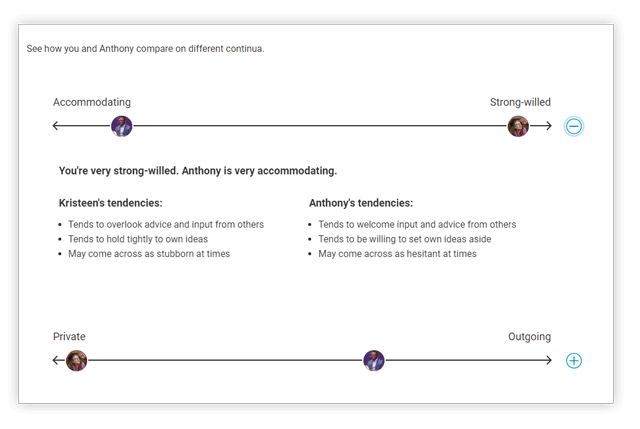
Questions for managers and employees to discuss from style comparison might include the following:
- How accurately does this represent our differences on each scale?
- How do our differences affect our relationship or our ability to work together effectively? What could we both do to improve communication?
- Are we taking advantage of your work style and the different strengths it brings to the team?
- If your annual performance reviews include accomplishment lists, are your lists the same? If they differ, why do you think that is?
- Do the future goals or projects listed on the review form reflect a desire to stay within a “personality comfort zone”?
- As the manager, do you find yourself wanting to give a better appraisal than merited because your employee is a “mini-me”?
Even if you don’t choose to look at your profiles together, DiSC assessments give you helpful tips for conducting performance reviews. For example, the report might tell you to avoid dominating discussions and encourage the candid sharing of opinions. Or provide more information about how a newly assigned project will work and what you will see as a successful outcome.
Reviewing a team
Employees typically do not work in isolation. Their teams and individual teammates can influence their behavior and productivity.
You may have the challenge of reviewing a team that is in conflict. Consulting the comparison reports of the individuals involved before the formal review will make you better prepared. You will be able to use their personality differences as filters through which to view the conflict. This can lower the heat on difficult discussions.
Even for high-performing teams, comparison reports and group culture reports are a boon. They can help you dig into why some people might not be as comfortable or as productive as they could be. For example, it can be stressful for someone whose DiSC profile differs considerably from that of most of the group. The group culture report can be a useful tool in performance reviews with someone whose potential in the group might not be fully realized.
Your Groups on Catalyst has many tools for assessing and improving team performance. For example, here is a group map for a team I'm on that happens to have half S styles and half D styles.

As a manager, what would this map tell you about navigating conflict and motivating the team as a whole? Catalyst provides many tools for having these conversations with your team.
A tool that incorporates DiSC with Patrick Lencioni’s model of cohesive teams is The Five Behaviors® Team Development. It focuses on the issues of trust, conflict, commitment, accountability, and results. If you have a few hours to devote to team development, this product can have a huge impact.
Many employees and managers feel some dread around performance reviews; this is no secret. Giving feedback can be a particularly challenging form of communication. Everything DiSC uses non-judgmental language and promotes the message that all personality styles are valuable. The DiSC model gives managers personalized talking points, a common language, and a clear path for employee development.
Posted 02/21/2012, Last Updated 09/07/2025


