


How to Be More Dynamic


Are there times when you wish you had a more dynamic personality? Situations in which you want to move faster and command attention? For some people, a dynamic personality comes naturally. For others, this mindset takes a lot of effort and energy. If you'd like to learn how to be more dynamic, there are ways to practice this skill.
Key Takeaways
- People with dynamic personalities are good at rallying others to action and creating change.
- People of all personality types may want to call upon the dynamic mindset when they need to persuade others, push toward a goal, or seize opportunities.
- You can practice being more dynamic by taking risks, making quick decisions, and adding energy to your body language and facial expressions, among other tips.
We all have natural tendencies that direct our behaviors and choices throughout the day. These attitudes feel so intuitive that we can forget there are other options. But the truth is, you can practice flexing into the mindsets that don't come as naturally to you. That way, you'll be better able to call on them when they're useful.
What is a dynamic personality?
“I know what I want and I go after it.”
People with dynamic personalities have a passion for persuasion. They are good at rallying colleagues to action and influencing change. They value momentum and excitement and are happy when shaping the world around them.
Dynamic individuals take initiative, set ambitious goals, and act quickly to transform ideas into reality. They want to make their mark and be at the center of the action. To do so, they are willing to take risks and seize opportunities. Naturally dynamic people often project strong, confident personalities that others find compelling.
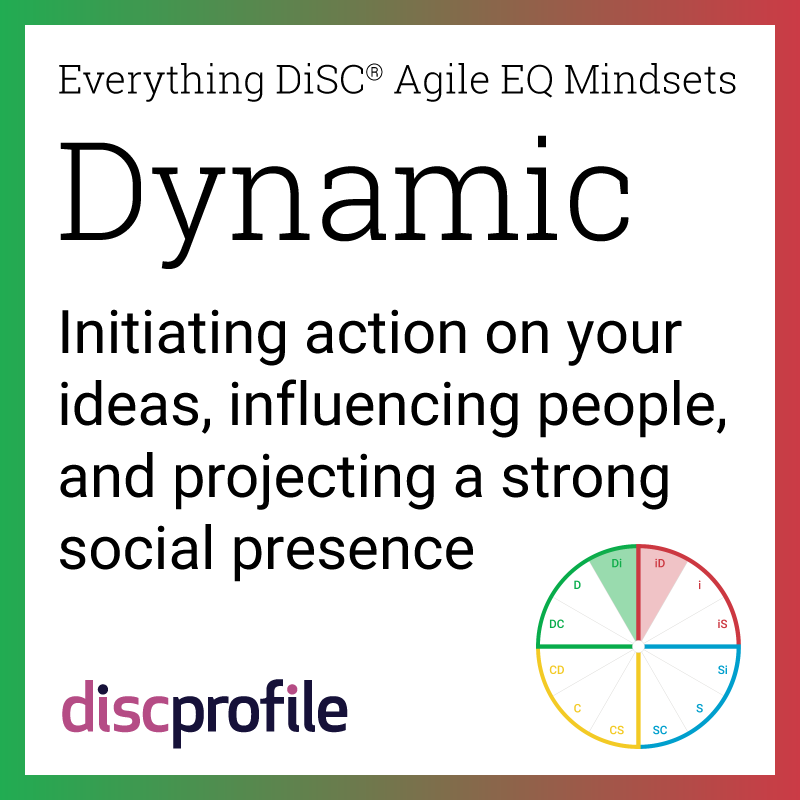
Dynamic is one of the eight mindsets described in Everything DiSC® Agile EQ™. It tends to align with DiSC Di and iD styles.
Everything DiSC Agile EQ
Dynamic individuals take initiative, set ambitious goals, and act quickly to transform ideas into reality. They want to make their mark and be at the center of the action. To do so, they are willing to take risks and seize opportunities. Naturally dynamic people often project strong, confident personalities that others find compelling.
Why are some people more dynamic?
Our natural mindsets are the ones we use automatically and with little effort. They emerge from our personal needs. Dynamic people find the mindset comfortable because it helps them satisfy needs such as:
- making progress
- influencing people and decisions
- achieving great things
- experiencing stimulation, excitement, adventure, variety
- directing their own fate
- commanding attention
- being in control
Benefits of a dynamic mindset
A dynamic mindset may come most naturally for people with Di and iD DiSC styles. However, people of all personality types can access this mindset when the situation calls for it. Whatever your personality style, a dynamic mindset allows you to:
- create interest and momentum to move your ideas forward
- take concrete steps to make your ideas a reality
- take advantage of novel opportunities that might otherwise go untapped
- lead others with energy and confidence
- take action rather than moving in circles
- embrace exciting events that might cause negative stress for others
- give your ideas more of a fighting chance
People of various DiSC styles will receive different benefits from practicing the dynamic mindset.
- It allows people with D styles and i styles, who might find the mindset more natural, to move ideas to action and influence others.
- C styles may think the logic of their idea should speak for itself. However, when they invoke the dynamic mindset, they can also connect with people on an emotional level. This helps to promote their view.
- S styles may have great ideas but hold back because they don’t like leading. Or, they may present suggestions tentatively, which ensures that others bury them. A dynamic mindset helps S styles make their voice heard and make a contribution.
Situations that may call for being more dynamic
Part of developing emotional intelligence is reading a situation to determine the best approach. The dynamic mindset may serve you well in today’s staff meeting, but cause tension in tomorrow’s. In general, you may need to be more dynamic when:
- persuading others
- promoting your ideas
- making an impression
- advocating for change
- moving from idea to execution
- inspiring others to action
- pushing toward a goal
- saying “yes” to new opportunities
When operating from the dynamic frame of mind, you don’t just “float your idea” and see what comes of it. You advocate for it, make a compelling argument, and take steps to make it happen.
Limitations of the dynamic mindset
It's possible to overuse the mindsets that are in your comfort zone. If you get stuck in the dynamic mindset, you might:
- disregard others’ concerns or forget to consider alternative options as you charge forward
- allow your drive to cloud your judgment
- allow your passion to overtake you
- push others to move ahead without giving them time to consider an issue
- be so goal-focused that you close yourself off to warning signs that something is wrong
- overwhelm your less dynamic colleagues, which can create resentment
- miss out on important or interesting discussions with people too reserved to speak up through your forcefulness
Understand why it's hard for you to be dynamic
How you approach practicing this skill will differ depending on your personality. We recommend taking the Everything DiSC Agile EQ assessment to see where your “effort meter” is for the dynamic mindset (see sample profile). These reports are highly personalized, giving individual learners insight into what subconscious thoughts may be standing in their way. Here is some general guidance.
Recognize your thoughts
Thoughts that can stand in the way of becoming more dynamic include:
- I don’t want to push people into this if they’re not interested.
- My idea is good, so I shouldn't have to sell it.
- If no one else seems excited about this, it’s probably not that great of an idea.
- If this doesn’t work out, I’ll look foolish.
- It would take too much energy to make this happen.
If you catch yourself having these thoughts, identify them. Then challenge them.
Yes, a good idea should sell itself. But that doesn't always happen, so what if you tried pitching your idea a little more this time?
Yes, it will take a lot of energy to build support for your idea and keep fighting for it. But think about the sense of accomplishment you'll feel when it succeeds. And think about how your team will benefit from your efforts.
Set goals
Take steps toward making it more comfortable for you to act dynamically. This may be things like:
- When I have a good idea, I share it with others to generate excitement.
- I consider my audience before pitching an idea or making a request.
- I bring positive energy and momentum to my collaborations.
- I’m someone who tends to shape the direction of projects and meetings.
- I’m comfortable acting now and working out the details later.
- I act decisively when needed.
That “when needed” is key. We’re not talking about a wholesale personality change.
6 tips for becoming more dynamic
I will never forget reading about how, when Prince started performing, he lacked charisma on stage. I grew up in Minnesota, land of Prince, and it never occurred to me that his dynamic personality was one he built through practice and intention.
Even if your career ambitions don't involve being a rock icon, you can learn from Prince's commitment to study and embody charisma.
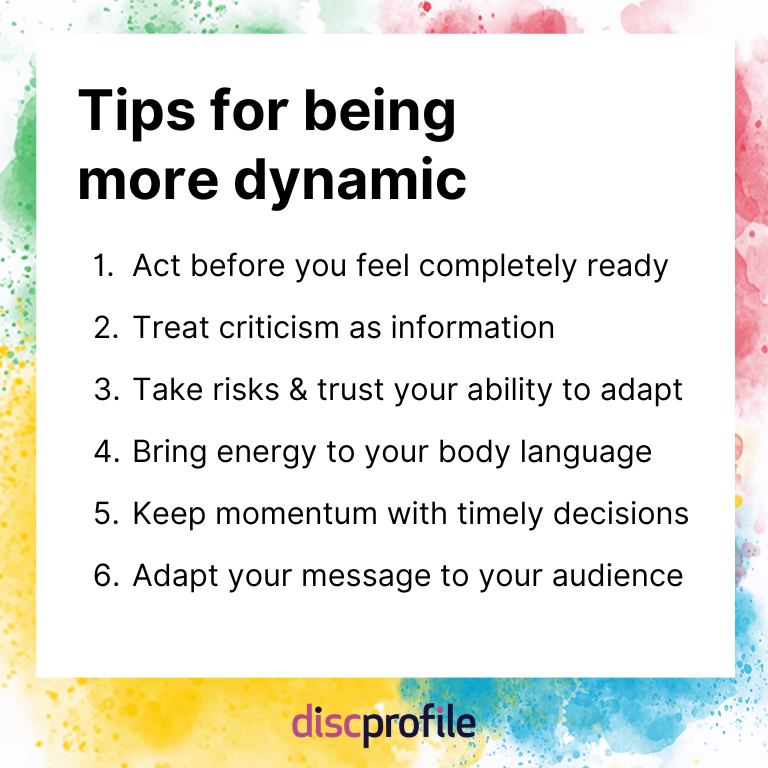
Your path to becoming more dynamic depends on your specific personality and the situations in which you'd like to be more engaging and influential. But in general, you can be more dynamic by acting before you feel ready, seeing criticism and mistakes as information rather than failure, making quicker decisions, and bringing energy to your body language and speaking style.
1. Put yourself out there before you feel completely ready
Dynamic people don't wait until they have the perfect idea or all the answers. They volunteer, start conversations, share suggestions, and make themselves visible. While this can feel uncomfortable, research suggests that people develop confidence through action and learning—not by waiting until they feel perfectly prepared. I can't find the original source of this quote, but I like how it summarizes this idea: Confidence is a side effect of action, not the prerequisite.
Instead of asking yourself, “Am I ready?” ask, “What's the next small step I can take?” Speaking up in meetings, introducing yourself to new colleagues, or taking ownership of a project are all ways to practice becoming more visible and influential.
2. Treat feedback and criticism as information
Dynamic people understand that criticism isn't necessarily a judgment of their abilities or worth. Rather, it's data that can help them improve.
Research on “feedback orientation” shows a positive correlation between how receptive someone is to feedback and their job satisfaction and performance.
You don't have to agree with every piece of criticism you receive. But cultivating curiosity instead of immediately rejecting feedback helps turn criticism into momentum.
3. Take calculated risks and trust your ability to adapt
Being dynamic requires a willingness to experiment and take risks.
Dynamic people aren't fearless. They simply believe they can recover and adjust if things don't go as planned.
Research on growth mindsets shows that people are more likely to persist when they view setbacks as part of the learning process rather than evidence that they lack ability. Instead of trying to eliminate uncertainty, focus on building confidence in your capacity to adapt.
4. Bring energy through your body language and presence
Communication is about more than words. Both verbal and nonverbal communication influence how leaders are perceived and how effectively they influence others.
Small adjustments can make you appear more dynamic:
- Maintain an open posture.
- Make eye contact.
- Vary your tone of voice.
- Add enthusiasm to your facial expressions and gestures.
These tactics can help others perceive your ideas as more engaging and inspiring.
5. Create momentum by speaking and deciding with confidence
Once again, this is not about perfection. Dynamic people don't make perfect decisions, they make timely decisions. They are often willing to move a discussion forward instead of waiting indefinitely for certainty.
The language you use matters, too. Compare "I'm not sure if this would work, but…" with "One option we could explore is…" Questions can also either create momentum or stall it. Asking "What's the next step?" or "How could we test this?" keeps people focused on action rather than uncertainty.
6. Adapt your message to your audience
Different audiences care about different outcomes, concerns, and priorities. Before presenting an idea, consider what your listeners value most. Some people want data and details. Others care more about relationships, innovation, or practical results. Framing your message around what your audience finds meaningful makes it easier for them to connect with your ideas.
As someone with a strongly-inclined SC style, I understand how perfectionism can limit action and lead to decision paralysis. In researching this article and working on dynamism in my own life, I relied heavily on what I've learned from my professional mentor, who has a Di style. When I need to keep momentum and make quick decisions, I channel her. Is there someone in your network who can be your dynamic inspiration?
If you’re thinking, “I want to become a dynamic person,” it’s easy to get overwhelmed. Instead, think: “I want to become more comfortable having a dynamic mindset.” This won’t happen overnight, but each small bit of progress will be rewarding. You will grow in ways you would not have otherwise.
The Everything DiSC Agile EQ assessment provides concrete tips to grow your EQ and learn how to stretch into other attitudes. It’s a helpful resource to use when working with a leadership or life coach, mentor, or accountability partner.
If you need one last bit of motivation to practice the dynamic mindset, think of it this way: No one else will ever be as invested in your vision as you are, so it’s up to you to bring it about.
Posted 08/10/2020, Last Updated 06/18/2026


