



How to Be More Empathetic


Do you find it takes effort to show empathy at work? For some people, an empathetic personality comes naturally. For others, empathy takes a lot of effort and energy. If you'd like to learn how to be more empathetic at work, there are ways to practice this skill.
Key Takeaways
- People with empathetic personalities care deeply about other people and prioritize compassion.
- People of all personality types may want to call upon the empathetic mindset when they need to relate better to others and make people feel safe.
- You can practice being more empathetic by offering support, learning to anticipate what people need, and attending to other people's emotional needs, among other tips.
Everyone has mindsets that come more easily to them, and mindsets that take more energy to employ. When you're running on your “default setting,” it can be hard to remember there are other mindsets you could call upon.
What does empathy mean?
“I notice how others are feeling.”
Naturally empathetic people prioritize compassion, caring deeply about the needs and emotions of others. They pay attention to nonverbal cues and notice when someone is upset. They know that everyone is going through something, and direct their energy toward understanding and offering support.
Empathizing people are generally great listeners. They don't just nod their heads—they consider what the words mean and reserve judgment.
Individuals with empathy see the best in people. They draw others out with their warm, accepting demeanor. This contributes to a supportive environment where people aren’t afraid to speak up about their concerns.
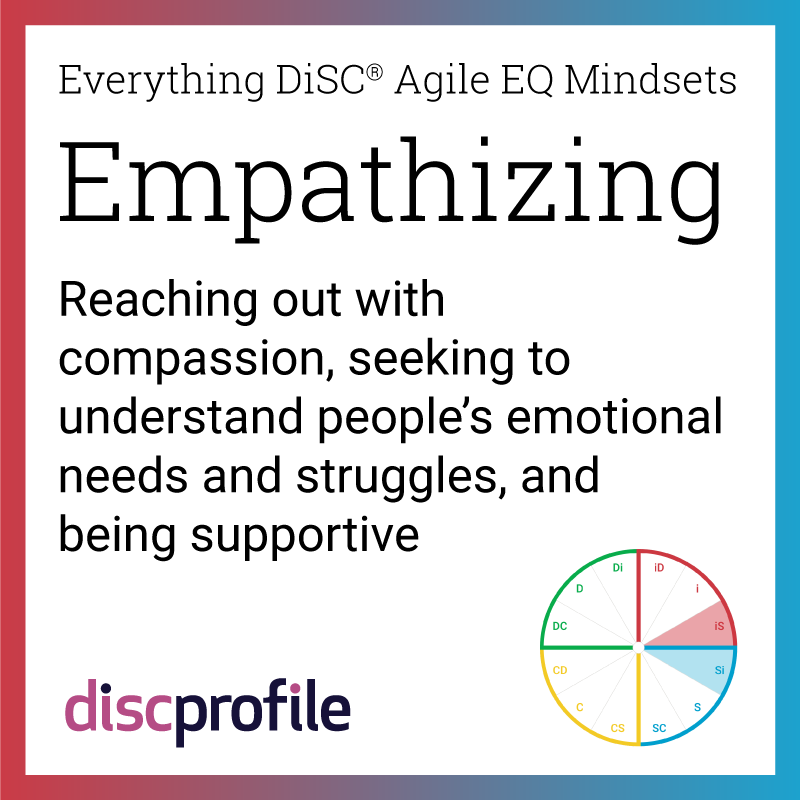
Empathizing is one of the eight mindsets described in Everything DiSC® Agile EQ™. It tends to align with DiSC iS and Si styles.
Everything DiSC Agile EQ
Why are some people more empathetic?
People with natural empathy feel fulfilled when their support can make a real difference in someone else’s life. They feel valuable when they make others feel valuable. People who are naturally empathizing feel comfortable in that mindset because it allows them to meet their core needs. These are things like:
- connection
- acceptance
- strong relationships
- harmony
- a caring, friendly environment
- being helpful
- providing emotional support
Benefits of an empathetic mindset
Empathy is a frame of mind that is available to everyone to call upon when the situation is right for it. Seeing things from another person's point of view is key to improving your emotional intelligence.
Whatever your personality style, an empathetic mindset allows you to:
- relate better to others
- develop stronger relationships
- notice verbal and nonverbal cues that something isn’t right
- stay open to the concerns of others
- be respectful of other perspectives
- contribute to a supportive environment that makes people feel safe
- gain a fuller picture of an issue, leading to better choices and results
Although the empathizing mindset focuses so much on helping others, it can also help the person practicing it. The advantages will differ for people of different DiSC styles. For example, empathy can make:
- D styles more approachable
- C styles less likely to get frustrated with others, and
- S styles less reserved.
In discussing the strategic importance of empathy, Stanford University’s Ed Batista talks about how most conflict stems from misunderstandings. He invokes a line from Jean Renoir’s film The Rules of the Game: “The awful thing about life is this: everyone has their reasons.”
Working to understand others helps explain why a person is acting a certain way. This understanding builds stronger teams.
Situations that may call for empathy
When is an empathetic mindset the right choice? You may need to call upon empathy when:
- trying to understand someone else’s motivations or behavior
- supporting a coworker who is struggling
- anticipating how your actions might impact others
- being approachable
- gaining deeper knowledge of another person
- creating a respectful environment
- looking for the full picture on an issue
- encouraging others to open up
Limitations of an empathetic mindset
If you’re a naturally empathizing person, it has probably served you well in many situations. But all mindsets have their limitations and can suffer from overuse. You face different situations every day. It’s unlikely that one way of thinking works best for all of them.
If you get stuck in the empathetic mindset, you might:
- minimize your own needs to attend to those of others
- be too lenient, excusing poor behavior or performance
- overextend yourself
- allow your judgment to be compromised
- try to soothe or pacify someone when a different response would be more helpful
- take on someone else’s work if they seem stressed out, which can create unhealthy dynamics and patterns
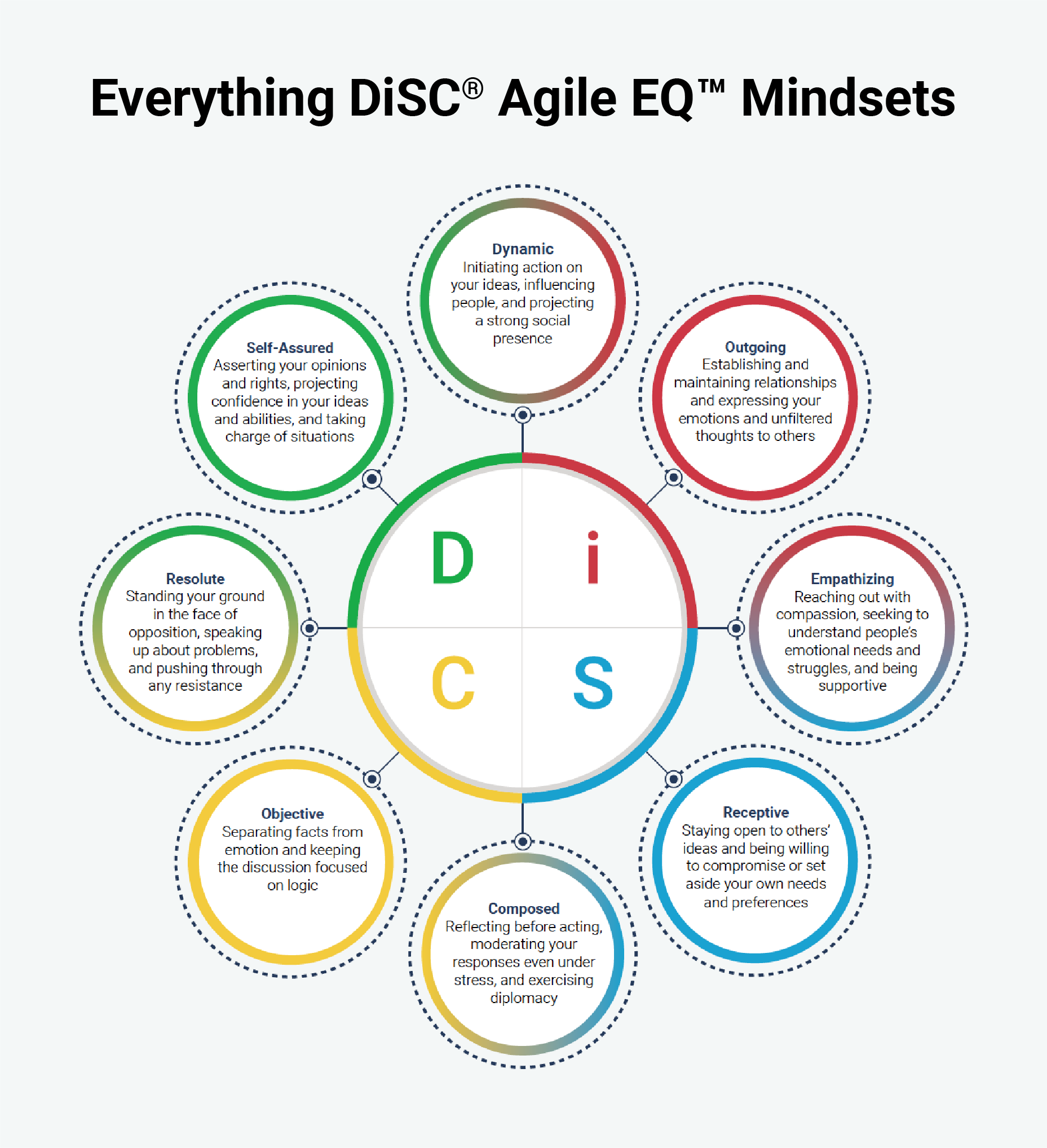
Even if you're naturally empathetic, there may be times when a more resolute or objective approach is best for the situation at hand. Read more about the eight Agile EQ mindsets.
Understand why it's hard for you to be empathetic
We recommend taking the Everything DiSC Agile EQ assessment to see where your “effort meter” is for the empathizing mindset (see sample profile). Agile EQ reports are highly personalized, but here is some general guidance for those wishing to practice empathy.
Recognize your thoughts
Try to notice automatic thoughts that make it hard for you to stretch into a mindset. Automatic thoughts arise in our minds throughout the day, but we are often unaware of them until we tune our attention to noticing them. For the empathizing mindset, these may be thoughts such as:
- I need to get out of this conversation as quickly as possible.
- They’d probably rather just be left alone.
- It’s not my job to coddle people, especially at work.
- I’ve got more important things going on.
- How hard is it to get this right?
- If I don’t say the right thing, I might make this worse.
Set goals
Some example goals for showing more empathy at work are:
- I will regularly check in with people to see if they need help.
- If talking with someone who is upset or emotional, I won't look for the first opportunity to leave.
- I will practice sharing in others' happiness.
- If someone frustrates or bothers me, I will stop and consider things from their perspective.
5 tips for becoming more empathetic
Yes, some people are naturally empathetic. However, research shows that empathy is a skill you can build. Keep a growth mindset!
— Erika Weisz, Harvard University
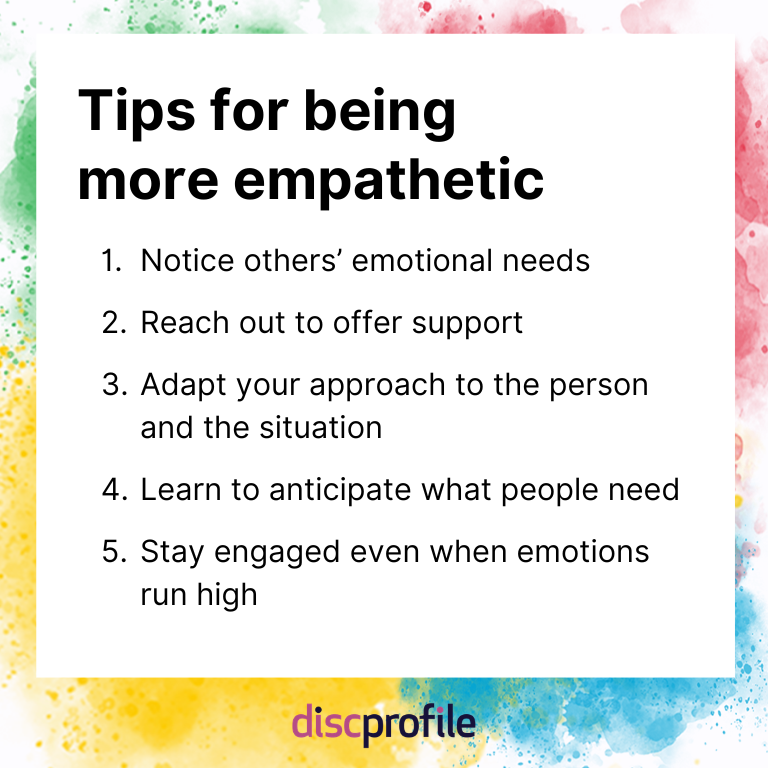
Everyone’s path toward empathy will look different. But in general, you can become more empathetic by: noticing others' emotional needs, reaching out to offer support, adapting your approach to the person and situation, learning to anticipate what people need, and staying engaged even when things get emotional.
1. Notice others' emotional needs
People don't leave their emotions at the door when they come to work. Stress, disappointment, excitement, and uncertainty all influence how people interact and perform. Empathetic individuals take time to notice these emotions and respond with care.
Tune in to positive emotions as well as the more taxing ones. Empathetic joy—sharing in or supporting someone's happiness—can be so powerful in building relationships!
2. Reach out to offer support
Once you begin to notice others' emotional needs more, you can choose to act on that information. Rather than waiting for people to ask, check in with colleagues who seem stressed, overwhelmed, or discouraged. A simple “How can I help?” can go a long way.
Offering support doesn't mean you have to solve every problem. For example, don't offer to take on work that you don't actually have time to do. Sometimes, listening, providing encouragement, or helping brainstorm options is enough to show that you care, and that people don't have to face challenges alone.
Remember to support people during good times as well. Research shows that providing encouragement for someone's good news can make them feel even happier about it.
3. Adapt your approach to the person and the situation
Every person is different, with different communication preferences and ways of handling challenges. What one person finds reassuring, another may find unhelpful. Knowing someone's DiSC style can help you navigate a variety of personality types.
In addition, every day is different. Interacting with the same person can be different from day to day. If your colleague seems particularly frustrated, they may appreciate a chance to vent. If they are happy about some good news, they might be looking for a chance to share and celebrate the news. Some days they may need extra help, and some days they may need their space. Do your best to recognize and acknowledge these very human fluctuations in emotion.
4. Learn to anticipate what people need
Empathetic people don't always wait until someone expresses a need. As relationships develop, they begin to recognize patterns and anticipate what others may need to feel supported.
For example, you may learn that one colleague appreciates regular updates, while another values advance notice before changes occur. By paying attention to people's preferences and experiences, you can often provide support before problems arise and create an environment where others feel safe and understood.
5. Stay engaged even when emotions run high
Empathy becomes especially important during difficult conversations. When people are upset, frustrated, or emotional, it can be tempting to withdraw or quickly change the subject. However, empathy requires staying present and remaining willing to listen.
You don't need to have the perfect response or immediately fix the situation. Simply listening with patience and curiosity helps people feel heard. This builds trust and creates stronger, more resilient relationships over time.
You can learn to develop empathy. It is a skill you can practice over time, not just an innate, unchangeable quality that you either have or you don’t.
Recent research shows that 80 percent of people have worked on a team where low EQ hurt productivity or created a toxic culture. By developing your agile emotional intelligence, you’ll become a greater asset to your organization, be a better teammate, and experience less stress yourself.
Posted 08/08/2020, Last Updated 06/11/2026


