



How to Improve Employee Engagement


Key Takeaways
- Engaged employees perform better, are happier at work, and are more likely to remain at the company.
- Managers have a great impact on employee engagement. There are many daily behaviors that can help managers support and invest in their people.
- Work relationships and a feeling of psychological safety are key to increasing employee engagement.
Improving employee engagement is not just the responsibility of HR. In fact, managers most often have the greatest impact on engagement.
Managers define work tasks and responsibilities and connect the dots between those tasks and the organization’s goals. They provide support and rewards for good work. They build teams where meaningful work and connections—or frustration and confusion—can happen.
State of the Global Workplace: 2026, Gallup
How managers and leaders can improve employee engagement
Managers don’t always understand how to engage their teams. They can boost employee engagement through coaching conversations with their direct reports, providing frequent constructive feedback, or connecting them to resources. Leaders need to make it clear that the manager’s role includes development of their teams and their people. Both managers and leaders need to receive the training, resources, and support to be successful.
Here are some practical ways leaders and managers can increase employee engagement:
Strengthen teamwork and accountability
Employees are more engaged when teams work well together and understand their purpose. Leaders should make sure teams:
- understand their goals and responsibilities
- know how their work contributes to business success
- receive recognition as a team, not just as individuals
- have support in developing teamwork skills such as communication, collaboration, healthy conflict, and peer accountability
Invest in employee growth and development
People are more likely to stay engaged when they can see opportunities to learn and grow. Managers can support development by:
- holding regular coaching conversations
- providing constructive feedback consistently, not just during annual reviews
- helping employees build new skills
- connecting employees to learning resources and career opportunities
- encouraging peer networks and cross-functional relationships
Create a culture of feedback and communication
Frequent, transparent communication helps employees feel informed and valued. Effective leaders:
- use multiple communication channels to improve clarity
- encourage two-way dialogue between managers and employees (instead of top-down messaging alone)
- share updates about organizational changes, policies, and opportunities
Use data to improve talent strategies
Organizations can strengthen engagement by investing in people analytics and workforce insights. This helps leaders:
- attract and hire the right talent
- identify development needs
- improve retention strategies
- prepare for future workforce challenges
Support managers with training and resources
Managers cannot drive engagement without support themselves. Leadership should make employee development a clear management responsibility and provide managers with:
- management skills training
- tools and resources for people management
- clear expectations around team development
Build trust and psychological safety
Employees are more engaged when they feel safe speaking up, sharing ideas, and asking questions. Leaders can build trust by:
- following through on organizational values
- demonstrating support for collaboration, learning, and work-life balance
- addressing toxic behavior quickly and consistently
- creating an environment where employees feel respected and heard

Psychological safety and relationships influence employee engagement
Work is about relationships as much as it is about tasks. Leaders and managers need to attend to the emotional culture of the organization to increase engagement.
Employees who don’t feel safe or who don’t trust their managers or colleagues will:
- hide problems
- engage in backstabbing
- be afraid of asking questions
- avoid taking even minimal risks
- fear retribution
When people feel disconnected from their organizations, they often find ways to voice their frustrations externally in venues such as Glassdoor or social media.
But those who feel valued for their unique skills, talent, and backgrounds can ask for help, bring up concerns, take reasonable risks, form bonds with others, and even enjoy their work. When employees see the organization’s values positively expressed through decisions and policies that affect them, when they experience management’s consideration for their well-being, they return this positive regard with greater engagement.
Review the psychological needs of DiSC® styles (PDF).
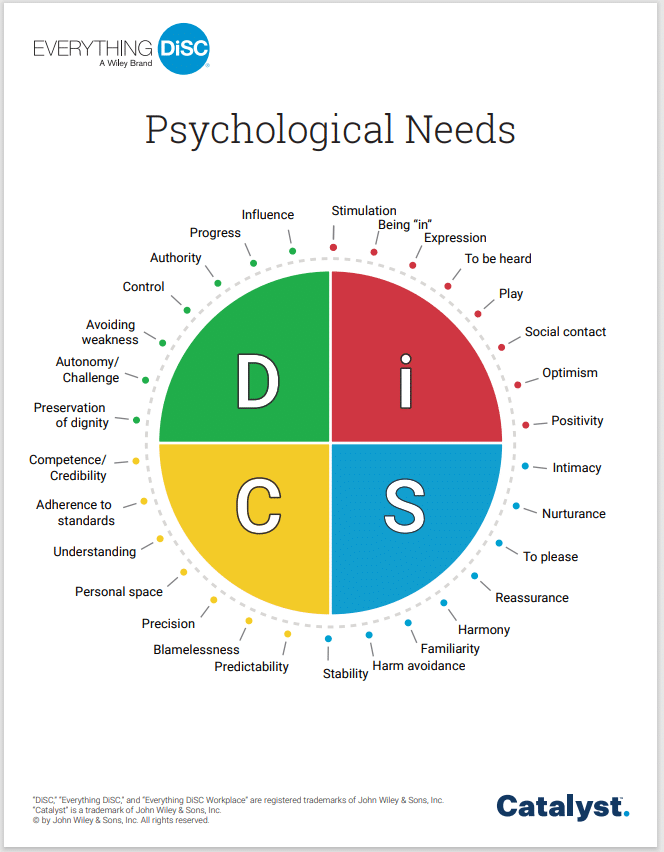
How can Everything DiSC® help with employee engagement?
Offering development programs that include DiSC shows a commitment to employee development and an interest in employees as individuals.
Improved relationship between manager and direct reports
Managers can learn how to manage, motivate, and delegate more effectively with the Everything DiSC® Management Profile. Managers can learn more about the soft skills they need to communicate better and develop their employees. DiSC can help managers understand how to better support and challenge their staff. They gain insight into their own behaviors and those of their direct reports.
Everything DiSC® Worksmart is a ready-to-use manager training tool. Worksmart offers trainer-led or self-led learning modules on topics like empowering your team and motivating direct reports. Managers can create and save action plans for each employee.
With the use of Comparison Reports, managers and employees can get specific tips for improving their working relationships. Managers can use this report to begin deeper conversations and to address assumptions they or their staff might have about each other. If you want to improve engagement and retention rates, improving managers’ relationships with their staff is a great place to begin.
Increased investment in developing leaders
Leadership development paths are often missing from organizations with low engagement rates. The Everything DiSC Work of Leaders® program develops leaders throughout your organization. By learning more about creating a vision, gaining alignment, and championing execution, leaders can strengthen their relationships with others in the organization, vendors, and customers.
A leadership development program can help with identifying emerging leaders, giving managers a way to reward top employees, and ingraining organizational values and culture. People from different departments, joined through their leadership development experience, gain an understanding of the entire business and start to see each other as peers instead of strangers or competitors for resources. Employees who experience this investment in their development are more likely to remain in the organization and increase their commitment to it.
Improved relationships with coworkers
Participants in DiSC programs will gain a deeper understanding of their colleagues—what motivates them, how to communicate with them, and what stresses them. This can make a significant difference on a team. Just sharing information about your own style and having others listen to you can increase your feeling of well-being. The Day in the Life activity can really help here.
Many of our clients use DiSC for onboarding as part of their efforts to engage a team in welcoming and integrating a new member. It often takes time for newly formed teams or new team members to learn how to work together.
Discuss questions like “how do you like to receive feedback” or “what motivates you” during a DiSC program. That has to be as essential as learning how to fill out an expense report. It reduces time spent by all team members on clarifying communication, dealing with unproductive conflict, or missing opportunities for development.
The Catalyst™ platform makes DiSC an even more embedded, long-lasting program. Employees can share their reports with team members and return to the reports before beginning new projects or if things get tense.
Show your employees that you value them, are curious about their personality styles and priorities, and are committed to their professional and personal development. Use Everything DiSC to increase employee engagement and foster healthy relationships throughout the workplace.
When delivering a program such as DiSC, we encourage you to use engagement as a performance indicator. You can do this by delivering a short engagement survey before you announce the introduction of DiSC and again several weeks later.
Posted 11/01/2022, Last Updated 05/18/2026


